




Riding helmets: the complete guide to choosing, fitting and wearing one safely
Choosing your riding helmet, fitting it properly, storing it and knowing when to replace it: here is our advice for riding and working around horses safely.

Always wear a helmet, on the ground as well as in the saddle
Wearing a helmet on horseback has always been mandatory, whether in competition or in training. But this rule has not always been followed: just a few years ago, it was not unusual to see riders training without a helmet. Attitudes have changed a great deal, and wearing a helmet in all circumstances is now standard practice, whether out on a hack or schooling your horse in the arena at home.
It is worth remembering, however, that many accidents also happen on the ground: while tacking up and grooming, leading a horse, or turning it out in the paddock, for example. Even the gentlest horse can react unpredictably, even when standing still: a kick can come out of nowhere.
In racing, the handlers who load horses into the starting stalls wear helmets. At auctions, the people presenting horses in hand wear helmets. At breeding shows and presentations, broodmares, foals and young horses are shown in hand by people wearing helmets.
So make a habit of wearing a helmet whenever you are handling your horse, not just when you ride. It is often in these supposedly "risk-free" moments that attention slips and accidents happen.

Choosing a riding helmet for your discipline
Two things are essential when choosing a helmet.
First, choose a model suited to your discipline. For example, in eventing, opt for a helmet without a peak for the cross-country phase to ensure maximum visibility. In endurance riding, go for a lightweight, well-ventilated helmet.
Next, choose a helmet you feel good in and that fits your size: comfort should always come before style. A helmet you forget you are wearing is a helmet you will be happy to wear. A helmet that does not suit the shape of your head and creates pressure points will quickly become uncomfortable after a few hours.
Size and head shape
Beyond size, heads also differ in shape, rounder or more oval: a model that fits one person perfectly can create pressure points for someone else. We recommend trying on several models at a retailer, especially for your first purchase, rather than ordering online without having tried the helmet.
The helmet must fit snugly: neither too big nor too tight. You should be able to move your head without the helmet moving, even with the chin strap loosened. To find your size, check our riding helmet size guide.
For children, never buy a helmet that is slightly too big thinking they will grow into it: in a fall, a poorly fitting helmet can tip forwards or backwards and no longer protect properly.
Positioning your helmet correctly
Make sure the helmet sits correctly on your head, neither too far forward nor too far back. The instructions supplied with each helmet explain in detail how to check the fit: do refer to them.

Check the helmet's certification and the requirements of your discipline
When buying, always check the certification label and the standard the helmet is certified to. It must correspond to horse riding: check the mandatory label inside the helmet and read the user manual carefully to confirm that the certification matches your discipline.
Never use a cycling helmet, even if it seems suitable or looks good: its safety requirements are not those of horse riding, even if they may seem similar.
Also check the current requirements with the federation for your discipline. France Galop, for example, requires jockeys to wear a helmet certified to EN 1384:2023: helmets certified to previous standards are no longer allowed. Another example: for international show jumping, dressage and eventing competitions, the FEI accepts helmets certified to EN 1384:2023 or to other standards (the list is published on the FEI website), but also requires an associated quality label.
For more details on certification standards and the tests involved, read our dedicated article.
Adjust the chin strap properly and check the buckle is fastened
A helmet must always be worn with a properly adjusted chin strap: neither too tight nor too loose. The rule is simple: leave about one finger's width (roughly 1 cm) between your chin and the strap.
Even at top level, we still see riders far too often wearing their helmet with a chin strap that is too loose. In a fall, the helmet can then tip forwards or backwards, or even come off completely, and no longer protect properly.
Some chin straps tend to loosen with use. So check the adjustment regularly and readjust as needed: it is a simple habit, but an essential one for your safety.
Finally, when you put your helmet on, make sure the buckle is properly fastened, whether it is a traditional dual-lock buckle or a magnetic one. It is easy to think it is fastened when it is not: a quick check avoids any nasty surprises.

Store your riding helmet properly and check it regularly
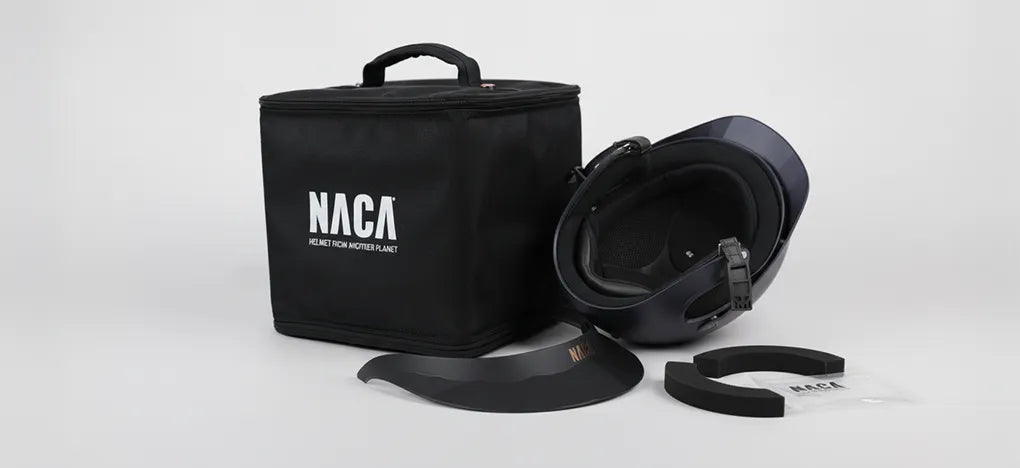
Store your helmet in its bag, at room temperature, away from heat and direct sunlight. Never leave it in a car or near a heat source: this can degrade the materials and adhesives used to make it. If possible, choose a dedicated spot where it is protected from knocks and dust.
Also get into the habit of regularly checking the overall condition of your helmet: outer shell, polystyrene, inner foam pads, chin strap and buckle. A crack, deformation or unusual wear should be a warning sign, even if you are not aware of any fall.
As for care, regularly cleaning both the shell and the removable pads keeps your helmet comfortable and hygienic. We explain how in our article how to clean your riding helmet.
When should you replace your riding helmet? How long does it last?
Even without any known impact, a helmet does not last forever. The protective foams compress and gradually lose their shock-absorbing properties over time and with use. The adhesives used in manufacturing break down, and the outer materials can weaken with UV exposure, sweat or changes in temperature.
For daily or weekly use, we recommend replacing your helmet every 4 years, even if it has not been in a fall and shows no visible damage. This period can vary depending on how often you use it, how it is stored and how well it is looked after. A helmet used more occasionally can be kept a little longer, while more intensive use will call for earlier replacement.
After a fall, the helmet must be replaced
On top of this, there is one rule with no exceptions: after a fall with an impact to the head, the helmet must be replaced, even if it looks intact to the naked eye. The safety components (shell and inner polystyrene) absorb the impact by deforming irreversibly, often without anything being visible from the outside. A helmet that has protected you once will not protect you in the same way a second time.
This rule applies to all manufacturers and all types of protective helmet, not just riding helmets. Every safety manual carries the mandatory statement: "a helmet that has suffered an impact must be discarded".
We cover this topic in depth in our dedicated article.
[PHOTO 5: Cross-section of a helmet showing the shell and inner polystyrene]
Avoid buying a second-hand helmet unless you fully trust the seller
Buying a helmet is no small decision: it is there to protect your head, and you only have one. That thought should make you cautious, especially when it comes to second-hand helmets.
A seller may claim their helmet has never taken a hit, but there is no real way to verify it. As we have seen, a helmet can absorb an impact without showing any visible damage, and its previous owner is not always able (or honest enough) to vouch for its history. Unless you fully trust the seller, it is best to avoid second-hand helmets.
Finally, keep your purchase invoice safe: you will need it for any warranty or after-sales claim, and it proves when your helmet was bought.
Frequently asked questions
How long does a riding helmet last?
For daily or weekly use, we recommend replacing your helmet every 4 years, even without any impact or visible damage: the materials and adhesives used to make it gradually lose their properties over time. This period can vary depending on how often you use it, how it is stored and how well it is looked after.
Should you replace your helmet after a fall, even with no visible damage?
Yes. The safety components (shell and polystyrene) absorb the impact by deforming irreversibly, often without it being visible. A helmet that has suffered an impact must be discarded, whatever it looks like. Find all the details in our dedicated article, as well as what we offer after a fall on our Warranty and After-Sales Service page.
Is it risky to buy a second-hand riding helmet?
Yes, because there is no way to be certain whether the helmet has already taken a hit, even if the seller says it has not. An impact can damage the helmet's structure without leaving any visible trace. Unless you fully trust the seller, it is better to avoid second-hand and choose a new helmet.